
Porcelain Slab vs Tile Shower Walls
Fewer joints or a detailed pattern? Compare cleaning, design, installation and the complete project scope.
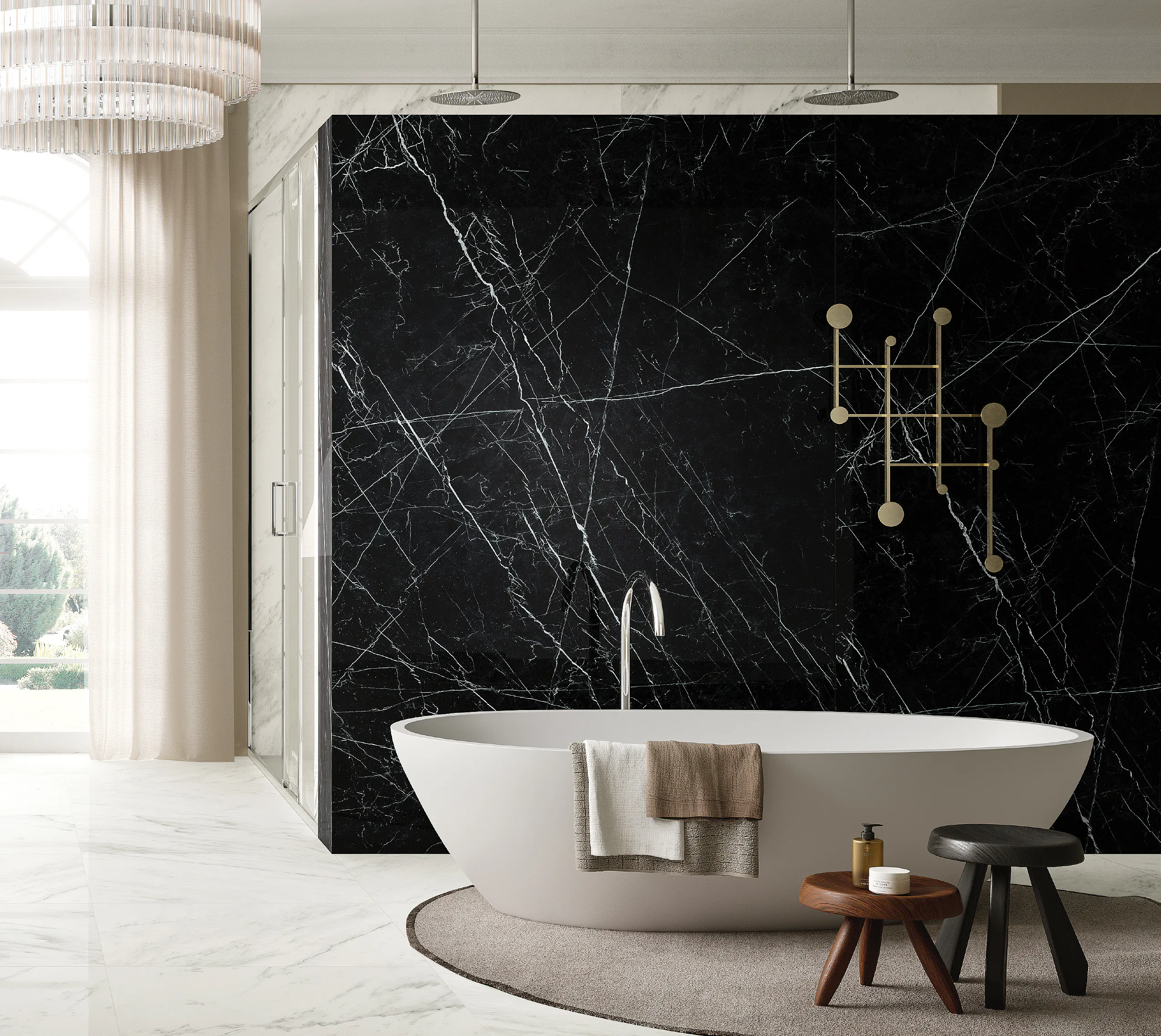
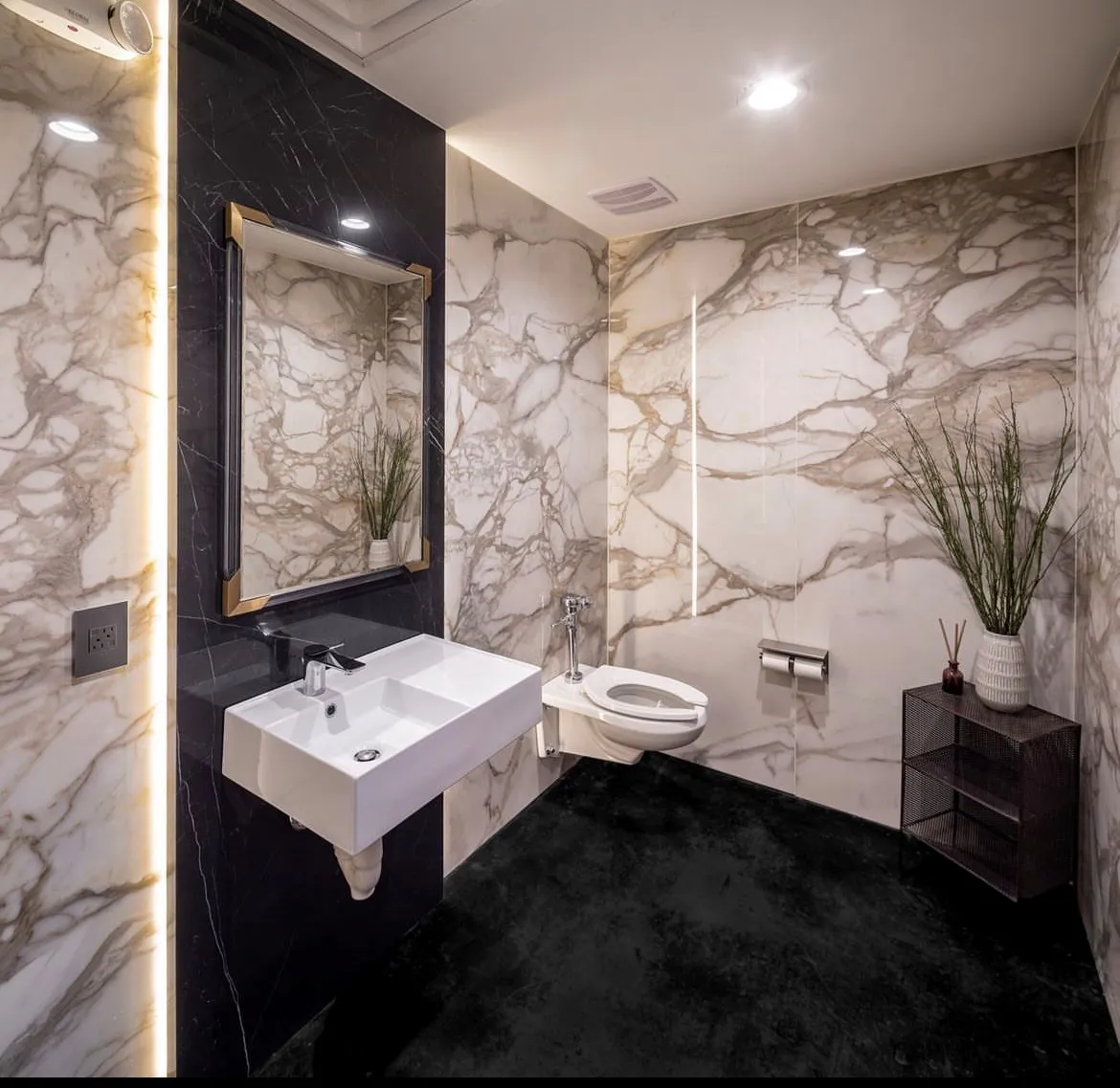
Porcelain bathroom inspiration from our gallery.
Compare the format, not just the material name.
Porcelain slabs suit a continuous design with fewer wall joints. Smaller tiles offer more freedom with shapes, mosaics and decorative layouts. Tile can itself be porcelain, so this is mainly a comparison of format and detailing. Choose using the actual wall layout, care requirements and installed quote. Both options need a properly specified shower assembly.
Have drawings or a tile-to-slab remodel in mind? Discuss your project with Porcelain Plus.
Slabs and tile at a glance
Here, “tile” means individually set ceramic or porcelain pieces, rather than large slab panels.
| Consideration | Porcelain slabs | Ceramic or porcelain tile |
|---|---|---|
| Main visual effect | Broad surfaces with fewer interruptions. | A visible grid, mosaic or pattern; larger tiles can also create a calm look. |
| Joints | Fewer panel joints when the layout allows; not joint-free. | Joint count varies with tile size and pattern. |
| Routine care | Fewer lines to work around when cleaning. | More joints with smaller formats; care depends on the tile and grout. |
| Waterproofing | Requires a suitable complete shower assembly. | Requires a suitable complete shower assembly. |
| Design detail | Continuous veining and large-scale patterns. | Extensive choices of shapes, sizes, trims and mosaics. |
| Handling & layout | Specialist handling, fabrication and access planning. | Individual pieces can suit smaller work areas; intricate patterns add work. |
| Local repairs | A damaged panel can involve a larger replacement. | An individual tile may be replaceable; matching stock and safe removal matter. |
| Installed price | Depends on slab yield, details, preparation and labor. | Depends on tile choice, pattern, preparation, grout and labor. |
Porcelain slabs and porcelain tile can share the same material family.
Large-format slab panels
Large porcelain panels create broad wall surfaces with a layout planned around usable slab dimensions, pattern direction and cutouts. They require careful handling and specialist fabrication. The final appearance depends on the selected product and the room: seams may still be needed on a wide or tall wall.
Individually set tile
Tile includes many sizes, from small mosaics to large rectangles, and can be ceramic or porcelain. The pieces and joints become part of the visual composition. A large porcelain tile can provide a quieter appearance than a small mosaic, so ask which format is actually being compared with slabs. For both approaches, confirm that the exact product, finish and installation method suit shower walls.
Five differences to discuss before choosing
Grout lines and everyday cleaning
A slab layout can reduce the number of lines across your shower walls compared with small-format tile. That can make wiping down broad surfaces simpler, but there will still be corners, fittings and joints to maintain. Tile size makes a difference too: a mosaic and a large rectangular tile are not the same comparison. Ask to see a drawing of each wall rather than assuming every slab shower uses one piece per wall. Choose the surface finish and cleaning routine together; both materials still collect soap residue and water deposits.
Moisture management comes first
Do not choose a finish as a substitute for waterproofing. The wall surface, substrate, membrane, joints and penetrations must work as a compatible assembly. Fewer joints do not establish that a shower is mold-proof. Ventilation and cleaning remain important in either design. Discuss how the installer will detail corners, the shower base, niches and plumbing openings before work starts. For a steam shower, ask for the specific system requirements rather than assuming an ordinary shower specification is sufficient.
Installation: compare the whole schedule
A slab project includes measuring, layout, fabrication, transport and setting; tile work includes setting individual pieces and finishing the joints. Both require suitable preparation and curing. Fewer pieces do not automatically mean a shorter total remodel. A complex slab layout, difficult access or detailed tile pattern can change the schedule. Ask for milestones from demolition and site preparation through installation and the date the shower can be used. Do not confuse the time between templating and installation with days spent working on site.
Design: continuous surfaces or deliberate pattern
Choose slabs when the main idea is broad veining, a bold feature wall or a visually quiet field with fewer interruptions. Choose tile when the individual pieces are part of the design: a mosaic, stacked grid, decorative border or varied shape. Large-format porcelain tile can also sit between these approaches. A combination can work well, with slab walls and a contrasting detail, provided every product suits its location. Decide on niches, bench edges and transitions early so the design is coherent beyond the main wall.
Repairs and future changes
An individual damaged tile may be replaceable, but removal must avoid harming adjacent pieces and the waterproofing behind them. A slab repair can involve a larger area and specialist work. In either case, a later replacement may differ in shade or pattern from the original. Discuss spare material, product identification and access to plumbing before installation. A leak or crack should be assessed for its underlying cause; replacing only the visible finish may not solve the problem. Neither format should be treated as damage-proof.
What drives the installed cost?
Start with the same scope for both quotes: wall area, demolition, substrate work, waterproofing, material, layout, niches, benches and cutouts. Slab yield, pattern matching and access can affect a slab quote. Tile selection, joint treatment and intricate patterns can affect a tile quote. Include setting materials, finishing, disposal and any separate trade work. A low material price alone does not establish the lower finished cost. Share measurements and photos so the options can be assessed for your bathroom rather than compared using an assumed price per square foot.
Confirm these details before ordering
Product and format
Confirm exact collection, usable size, thickness, finish and intended application. Do not substitute a generic slab or tile description for product specifications.
Wall layout
Review joints, pattern direction, cutouts, niche returns and edge treatments on a wall-by-wall drawing.
Installation system
Confirm substrate requirements, waterproofing, setting materials, joint details and compatibility of all components.
Availability and timing
Confirm quantities, spare material, delivery, fabrication, site readiness and curing requirements for the actual project.
When tile may be the better fit
Choose tile when the pattern of individual pieces is central to the design: a mosaic feature, a decorative border or a custom arrangement of shapes and colors. It may also suit a project where the selected tile and labor scope meet the available budget better than slabs. Compare actual proposals rather than assuming every tiled shower costs less. Large porcelain tile is worth considering when you want a simpler pattern without choosing full slab panels.
Porcelain slab vs tile shower walls: FAQs
Are porcelain slab shower walls worth it compared with tile?
They can be a good fit if fewer visible joints and a continuous surface are high priorities. Compare the full installed quote and the proposed wall layout. Tile remains a valid choice for decorative patterns, smaller formats or a different budget.
Is a porcelain slab shower really grout-free?
Not in the sense of having no joints. Slabs can reduce joints across the wall, but seams, corners and changes of plane still need appropriate detailing. Ask how those areas will be finished and maintained.
Can porcelain slabs go over existing tile?
Do not assume this is suitable. The installer must assess bonding, flatness, load, existing waterproofing and the selected installation system. Removal may be necessary. We recommend a site assessment before quoting an overlay approach.
Which is easier to clean: tile or slabs?
Slabs generally give you fewer joints to work around than small-format tile. Both need regular cleaning. Grout care varies by formulation; not every grout requires sealing. Follow the selected surface and grout manufacturers’ instructions.
Do slab shower walls always cost more than tile?
No single rule covers every project. Compare material quantity and waste, preparation, waterproofing, fabrication, pattern complexity, access and labor. A basic tile layout and an intricate mosaic have different costs, just as simple and highly detailed slab layouts do.
Partner with Porcelain Plus
Bring your drawings, samples and priorities to our showroom. We work with designers, dealers and builders to discuss porcelain selection, fabrication and installation.
Homeowners are welcome to bring their designer or contractor into the conversation.
Continue exploring
Technical guidance: Daltile porcelain shower panels · Schluter shower waterproofing · MAPEI tile and grout guidance. Follow the current instructions for your selected products and installation system.