
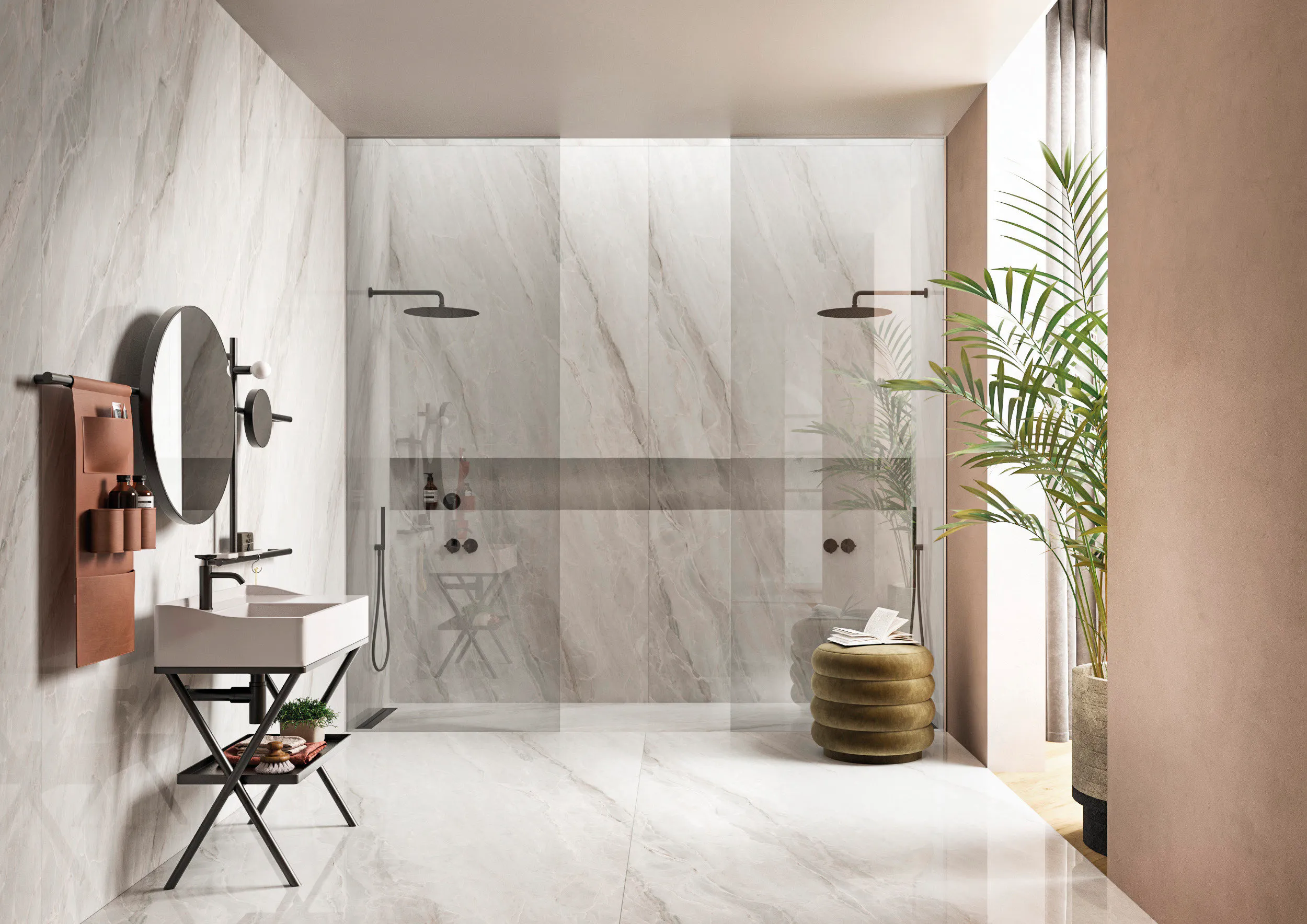
Porcelain vs Quartz Shower Walls
Which is right for your bathroom? Compare slab layouts, care and installation considerations before you specify.
Porcelain bathroom inspiration from our shower wall gallery.
Two slab surfaces. Different project priorities.
Both porcelain and suitable engineered quartz can create shower walls with fewer joints than small-format tile. Porcelain is a strong choice for large-format designs and slim panel options. Quartz may suit a bathroom coordinated with an existing quartz vanity. The best choice depends on the selected slab, wall layout, installation system and care requirements, not a universal winner.
Planning a client project? Explore our trade partnership or bring your material selections to a showroom visit.
Porcelain and quartz at a glance
Compare the specific products being quoted. Size, finish and thickness vary within both categories.
| Consideration | Porcelain slabs | Engineered quartz |
|---|---|---|
| Shower-wall use | Large-format panels are available for shower walls. | Selected products are suitable for shower surrounds; check the exact manufacturer specification. |
| Seams & layout | Panel dimensions and vein layout determine seam positions. | Standard and jumbo formats exist; wall size and the selected slab determine seams. |
| Thickness & handling | Thin panel options are available; careful specialist handling is still essential. | Thickness varies by product. Compare actual panel weight and installation requirements. |
| Surface sealing | Porcelain surfaces generally do not require sealing. | Engineered quartz surfaces generally do not require sealing. |
| Everyday cleaning | Use the manufacturer’s recommended cleaner; clean joints and fittings too. | Use approved cleaners and avoid harsh chemicals that may damage the surface. |
| Design range | Options include bold veining, restrained patterns and textured finishes. | Options include solid colors and veined designs. View the actual slab and finish. |
| Bathroom coordination | Can coordinate shower walls, niches and other suitable surfaces. | May coordinate with a quartz vanity; confirm color, finish and batch availability. |
| Installed cost | Depends on slab use, preparation, details, access and labor. | Depends on slab use, preparation, details, access and labor. |
A surface is only one part of a shower. Substrate, waterproofing, adhesives, joints and penetrations need a compatible, correctly installed system. Neither material alone makes the assembly waterproof.
What are you comparing?
Large-format porcelain
Porcelain is a fired ceramic material available in large panels, with different patterns, finishes and thicknesses. For shower walls, the selected panel and installation method should be suitable for the application. A large format lets the slab design take center stage, while seams are planned around actual wall dimensions and details.
Engineered quartz
Engineered quartz is a manufactured surface containing mineral material and a binder. It is not the same material as natural quartzite. Some quartz products are suitable for shower surrounds, with choices ranging from quiet solid colors to expressive veining. Suitability must be checked for the particular product rather than assumed for every quartz slab.
For either option, review full slabs or representative samples alongside your vanity, fixtures and lighting. A small sample does not show the complete pattern or every variation.
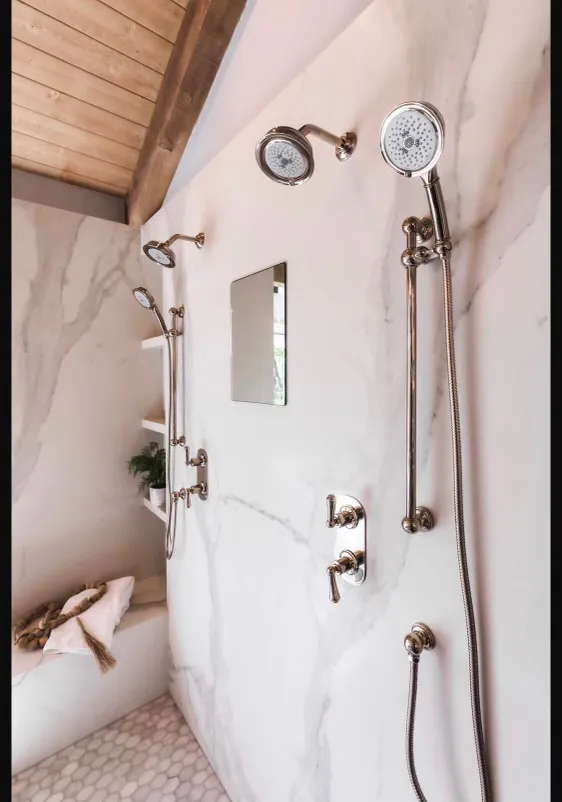
Five differences worth discussing
Slab size and seam layout
Do not assume porcelain always has fewer seams. Both materials come in large formats, and some quartz collections offer jumbo slabs. Ask for a wall-by-wall layout showing the actual usable slab dimensions, pattern direction and seam positions. Door openings, sloped ceilings and niches can change the number of pieces. A continuous-looking wall still needs appropriate joints at transitions and changes of plane. For a strongly veined design, review the proposed arrangement before fabrication; book-matching is available only in suitable designs and slab combinations.
Thickness, handling and installation
Thin porcelain options can reduce material weight compared with thicker slabs, but the actual thickness and product data matter. Large, thin panels need specialist handling, suitable tools and careful preparation; lighter does not automatically mean easier or cheaper to install. Quartz also requires appropriate handling and support. Ask the installer to check the substrate, flatness, access route and fixing or adhesive requirements for the selected product. The whole installation approach matters more than a simple “light versus heavy” label.
Cleaning in a wet environment
Both surfaces can be practical for routine care, but neither is maintenance-free. Soap residue and water deposits still need cleaning, and joints and fixtures need attention. Use the cleaner recommended for the exact surface and finish. Avoid treating porcelain as resistant to every chemical, or using aggressive descalers on quartz without manufacturer approval. A standard shower and a steam shower also have different demands: confirm the complete system for the intended use rather than relying on broad heat-resistance claims.
Pattern, finish and the room’s light
Porcelain offers many visually expressive slab designs, but quartz is not limited to plain or softly patterned surfaces. Both categories include a broad design range. View the selected finish in the bathroom’s lighting and consider how it will look wet as well as dry. Strong veining may need more careful slab selection and layout; a quieter pattern may make transitions less noticeable. Ask about edge appearance, niche returns and bench details before choosing based only on the main wall.
Coordinating with an existing vanity
If you already have a quartz vanity, using the same collection may create a coordinated scheme, provided a suitable wall product is available. An exact visual match is not guaranteed across production batches, finishes or older installed material. Bring a sample or clear product identification to the discussion. Porcelain can also coordinate with other bathroom surfaces, without requiring every element to be identical. Compare undertones, pattern scale and finish so that the shower and vanity work together as a complete design.
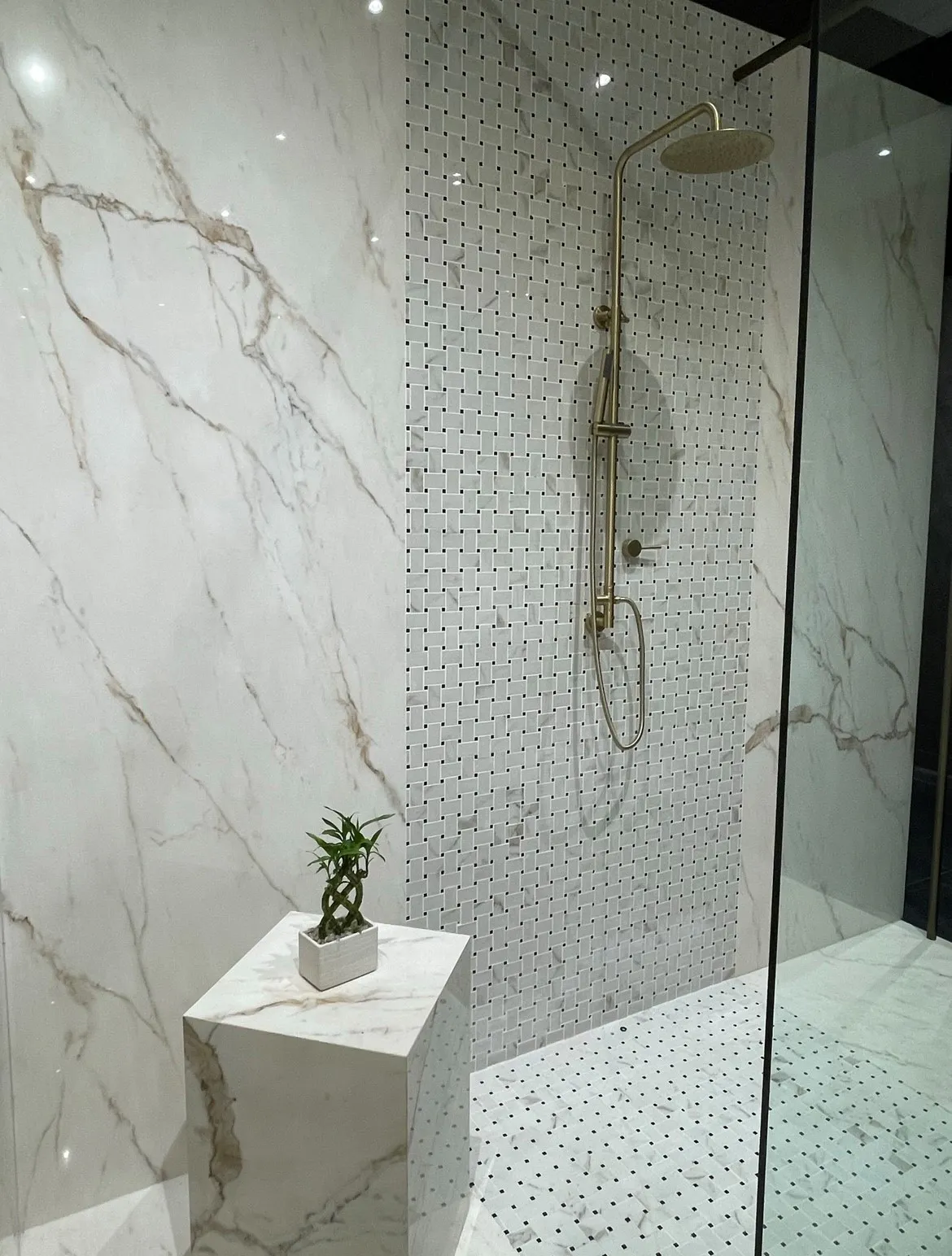
What drives the installed cost?
A useful comparison starts with the same scope: wall area, slab selection, layout and preparation. Include demolition where needed, waterproofing, substrate work, fabrication, cutouts, niches, benches, edges, access and installation labor. Pattern matching and slab waste can also affect the quote. Ask what is included and which trades or materials are separate. Do not assume a thinner panel automatically reduces labor, or that one material is always less expensive. Share your dimensions, photos and priorities so we can discuss a quote for your project.
Images illustrate design details; no project location or installation duration is implied.
Confirm these specifications before ordering
Size and thickness
Confirm the exact collection, usable slab size, thickness and panel weight. For example, Stonepeak PLANE 2.0 lists 60 × 120-inch panels at 6 mm; this is a product example, not a statement of current stock.
Finish and layout
Check finish availability, pattern direction, edge treatment and whether the selected slabs support the intended vein layout.
Installation system
Confirm substrate preparation, waterproofing, adhesives, joints, cutouts and the specific requirements for a standard or steam shower.
Availability and schedule
Confirm stock, fabrication lead time, site readiness and installation timing for the actual project. Allow for curing before use.
When quartz may be the better fit
Consider quartz when a suitable wall product coordinates with a vanity you want to keep, or when a particular quartz color and finish best suits the room. A uniform scheme can be a valid design priority. Verify the current product’s shower suitability, availability and care requirements, and compare the complete installed scope. There is no reason to rule out quartz solely because porcelain is also an option.
Porcelain vs quartz shower walls: FAQs
Is porcelain or quartz better for shower walls?
Porcelain is a strong option when you want large-format panels and a distinctive slab design. Quartz can also be suitable, especially when coordinating with an existing quartz vanity. Choose using the exact product specification, wall layout, care requirements and installed quote rather than the material name alone.
Can quartz be used on shower walls?
Yes, some engineered quartz products are specified for shower surrounds. Confirm the selected product, thickness, adhesive, support and joint details with its manufacturer and your installer. Approval for a standard shower does not automatically establish suitability for a steam shower.
Do porcelain shower walls need sealing?
The porcelain surface generally does not need a penetrating sealer. That does not remove the need for properly detailed joints, waterproofing and ongoing care of sealant and other components. Follow the requirements for the selected surface and complete shower assembly.
What affects the cost of porcelain vs quartz shower walls?
Wall dimensions, slab quantity, layout, waste, demolition, preparation, niches, benches, cutouts and site access all affect the installed price. Ask for a quote based on the same scope so you can see what each option includes.
How long does a porcelain slab shower take to install?
Timing depends on material availability, site readiness, templating, fabrication, installation and curing requirements. Ask for a project-specific schedule. The time between templating and installation is different from the number of days spent installing, and neither should be assumed from a material comparison.
Partner with Porcelain Plus
Bring your clients, drawings and material ideas to our showroom. We work with designers, dealers and builders to discuss slab selection, fabrication and installation.
If you are a homeowner working with a designer or dealer, include their details so we can coordinate the next steps together.
Continue exploring
Product guidance: Stonepeak PLANE 2.0 · Stonepeak care guidance · Caesarstone sizes and finishes · Caesarstone care guidance. Always use the current instructions for the specific product selected.