
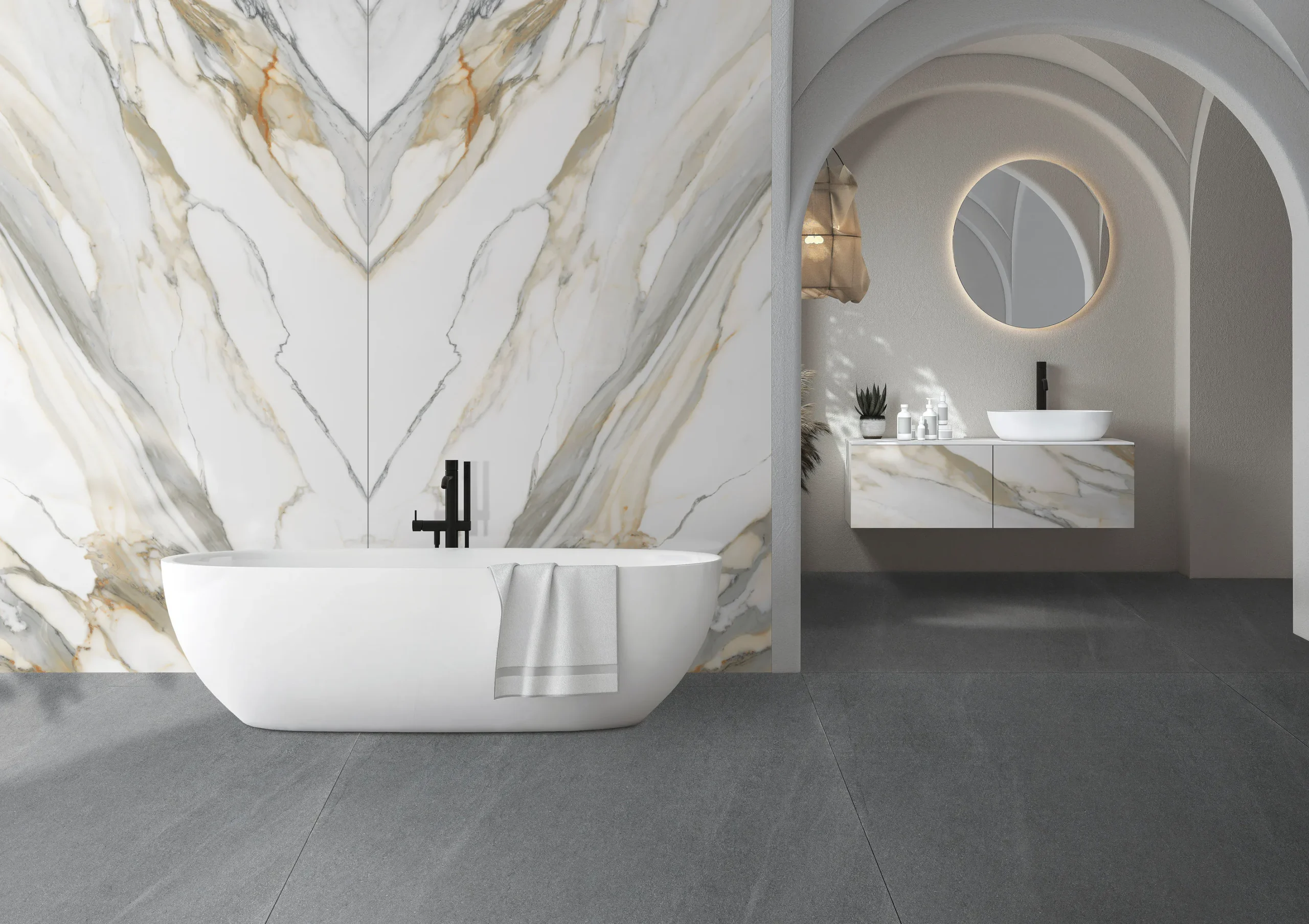
Porcelain vs Marble Shower Walls
Natural character or a designed porcelain surface? Compare appearance, care and project details before choosing your shower walls.
Macchia Vecchia porcelain bathroom inspiration from our gallery.
Choose the character. Understand the care.
Natural marble offers unique mineral patterns and a finish that can change with use. Porcelain offers designed veining and generally simpler surface care. For a daily-use shower, compare your tolerance for visible wear, cleaning routines and slab layout. Choose marble when genuine natural stone is the priority; choose porcelain when you prefer its design options and care requirements.
Specifying for a client? Explore our trade partnership and discuss samples, layouts and fabrication details with us.
Porcelain and natural marble at a glance
These are material-level considerations. Confirm the exact product, finish and installation specification.
| Consideration | Porcelain slabs | Natural marble |
|---|---|---|
| Appearance | Designed patterns, from restrained to expressive veining. | Natural variation; every slab has its own character. |
| Seams and pattern | Layout depends on slab dimensions and available faces. | Layout depends on the actual stone slabs and their veining. |
| Surface sealing | Generally not required; confirm the selected finish. | May be recommended; use guidance for the specific stone and treatment. |
| Acid exposure | Follow product-specific chemical and cleaning limits. | Acidic products can etch the surface, creating dull marks. |
| Routine care | Regular cleaning of the surface, joints and fittings. | Stone-safe cleaning, plus any recommended sealing or restoration. |
| Handling | Thin panels are available; specialist handling remains important. | Confirm slab thickness, weight, support and access requirements. |
| Wet-area installation | Needs a compatible, correctly detailed shower assembly. | Needs a compatible assembly and stone suitable for the intended conditions. |
| Budget | Compare the complete installed scope and ongoing care. | Compare the same scope, including any anticipated stone care. |
Neither a slab nor a surface sealer replaces shower waterproofing. Substrate, waterproofing, joints, penetrations and installation materials must work as a complete system.
Designed porcelain. Natural stone.
Large-format porcelain
Porcelain is a fired ceramic material. Its pattern and surface finish are manufactured, with options for quiet backgrounds, dramatic veins and coordinated slab faces. It is a distinct material, not natural marble. Inspect the full design, finish and edge treatment rather than choosing from a small sample alone.
Natural marble
Marble is quarried stone, with variation shaped by its mineral composition. Selecting the actual slabs is part of the design process: color, vein direction and surface character may differ from a sample. Its natural origin can be the deciding factor for clients who value a one-of-a-kind material.
Compare both in the room’s lighting and consider how the vanity, metal finishes and shower fittings will work with the selected surface.
Five differences worth discussing
Sealing is not the same as waterproofing
Ask for a care plan for the actual marble selected. A penetrating sealer can improve stain resistance, but it does not make stone stain-proof or replace a waterproof shower assembly. There is no universal resealing interval for every marble shower. Porcelain surfaces generally need no penetrating sealer, although finish-specific instructions still apply. In either case, joints and other installation components require their own maintenance.
Etching and staining are different
A stain changes the material’s color; an etch changes its surface finish. Marble can develop dull marks after contact with acidic products. A penetrating sealer does not prevent this reaction. Do not assume every shampoo will damage marble, but check the products you use and choose stone-safe cleaners. Porcelain has different care requirements, not unlimited chemical resistance. Follow the selected manufacturer’s instructions rather than using aggressive bathroom cleaners indiscriminately.
Vein flow, matching and book-matching
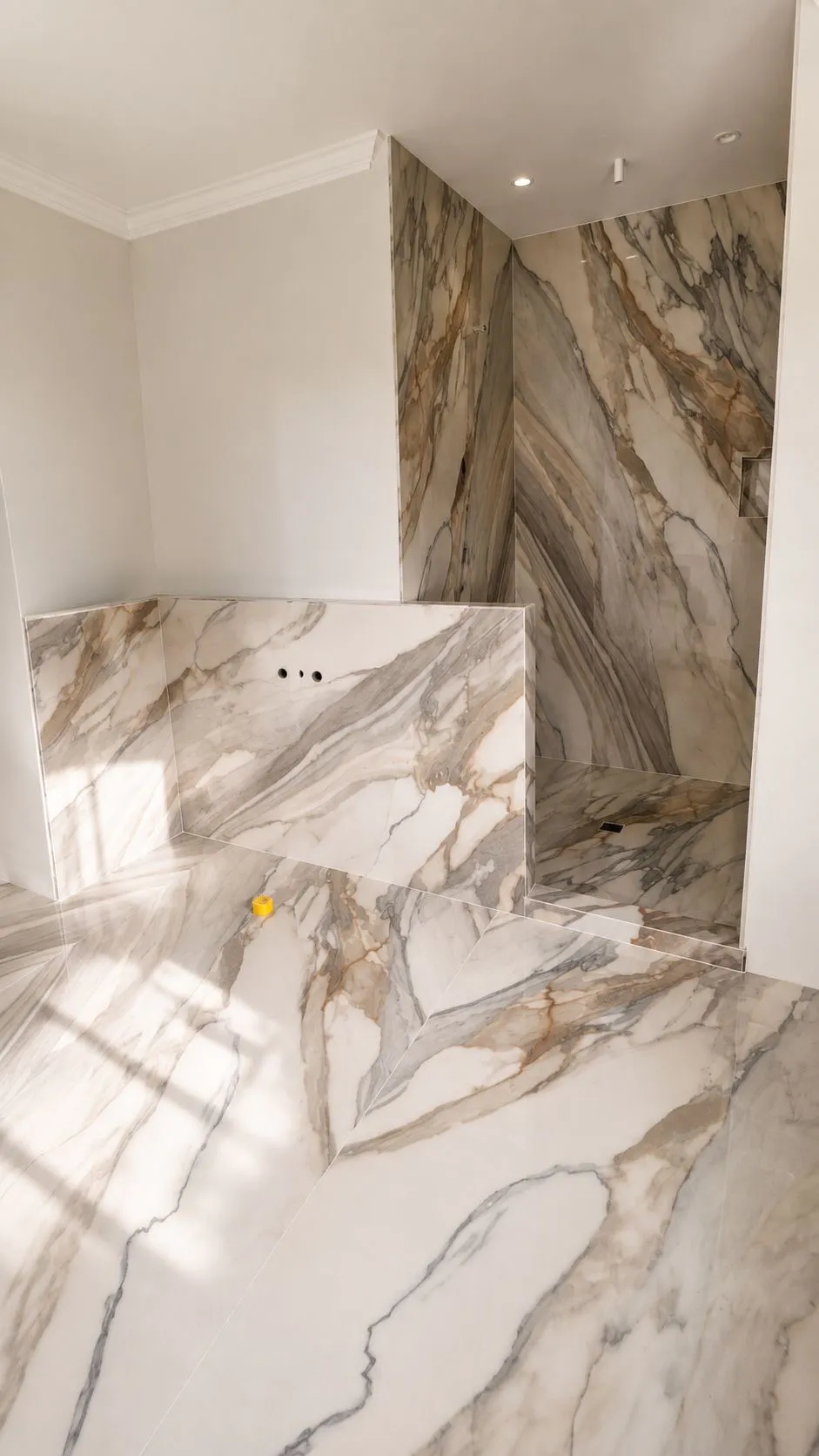
Natural marble offers individual character; porcelain offers designed patterns with specific faces and repeat possibilities. For either material, ask to see a wall-by-wall layout. Vein flow describes the visual direction across the room, while vein matching seeks continuity between adjoining pieces. Book-matching creates a mirrored arrangement and depends on suitable slabs or paired faces. It is not available in every collection or combination. Review corners, niches and returns as carefully as the main wall.
Thickness and access affect installation
Do not assume that a thin porcelain panel is automatically easy to install, or compare weight without checking the actual thickness. Large pieces require a planned handling route, appropriate tools and a prepared substrate. Ask how the design accommodates stairs, doorways, plumbing cutouts and fragile edges. For marble, confirm the selected stone’s suitability and any support requirements. For both, the installer should verify the complete assembly, including any special requirements for a steam shower.
Choose the finish you want to live with
Some clients welcome the evolving character of natural stone; others want a more consistent-looking surface with a simpler care routine. Discuss that preference before selecting the material. Neither choice is maintenance-free, and neither should be sold with a guaranteed resale premium. Ask what normal wear looks like, which repairs are possible and what maintenance is realistic for your household. The right finish is one you appreciate in daily use, not only in a showroom photograph.
Find the veining that fits your room
Browse these porcelain collections, then confirm current slab faces, finishes and availability. Product names do not mean the material is natural marble.
When natural marble may be the better fit
Choose marble when genuine quarried stone is central to the design and you are comfortable following a stone-specific care plan. Its unique pattern may be worth more to you than uniformity or a simpler maintenance routine. Select suitable slabs with your stone professional, discuss finish changes and care expectations, and review the proposed installation. Porcelain is an alternative, not a substitute for the meaning a client attaches to natural material.
Compare the complete project
Installed cost depends on slab selection, quantity, waste, preparation, access and detail work. Ask both quotes to cover the same walls, niches, benches, edges, cutouts and waterproofing responsibilities. Include demolition and substrate correction where needed, and clarify what is supplied by other trades. For marble, discuss potential future sealing or restoration; for porcelain, allow for normal cleaning and joint maintenance. Neither material has zero upkeep cost. A project-specific quote is more useful than assuming one category is always more expensive.
Material and finish
Confirm the exact product or stone, thickness, finish, slab dimensions and suitability for the intended shower.
Layout and details
Approve pattern direction, seam locations, returns, niches and edge treatments before fabrication.
Installation system
Confirm support, waterproofing, setting materials, joints and any steam-shower requirements with the installer.
Schedule and aftercare
Confirm availability, templating, fabrication, installation and curing time. Request written care instructions for the selected materials.
Porcelain vs marble shower walls: FAQs
Is marble a good choice for shower walls?
It can be, when the selected stone is suitable for the application and its care requirements fit your expectations. Review the actual slabs, finish and installation system with a stone professional before ordering.
How often do marble showers need sealing?
There is no single schedule for all marble showers. Ask the stone supplier and sealer manufacturer about your particular stone, treatment and use. Sealing may improve stain resistance, but does not prevent acid etching or replace waterproofing.
Will porcelain veining look convincing in my bathroom?
That is a visual choice best made with a full slab or representative display. Look at pattern scale, repetition, finish and edge details in person. Porcelain can create an expressive design, but it is not identical to natural marble.
Will my shampoo damage marble shower walls?
It depends on the formulation and the stone’s finish. Acidic products can etch marble; avoid assuming that a sealer prevents this. Ask your supplier for suitable personal-care and cleaning guidance, and rinse away residue as recommended.
Can I see porcelain slabs in person near Lowell, MA?
Book a visit to the Porcelain Plus showroom to discuss available porcelain selections and your shower layout. Bring photos, dimensions and any existing material samples. Contact us ahead of time if you want to see a particular collection or compare it with a natural-stone sample.
Partner with Porcelain Plus
Bring your clients, drawings and material ideas to our showroom. We work with designers, dealers and builders to discuss slab selection, fabrication and installation.
Homeowners are welcome to bring their designer’s or dealer’s details so we can coordinate the next steps.
Continue exploring
Care references: Natural Stone Institute care guidance · Natural Stone Institute: marble and etching · Stonepeak technical and care documents. General care guidance does not replace the specifications for your selected product and shower system.